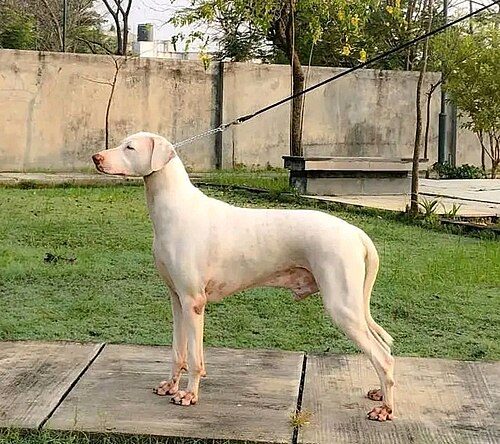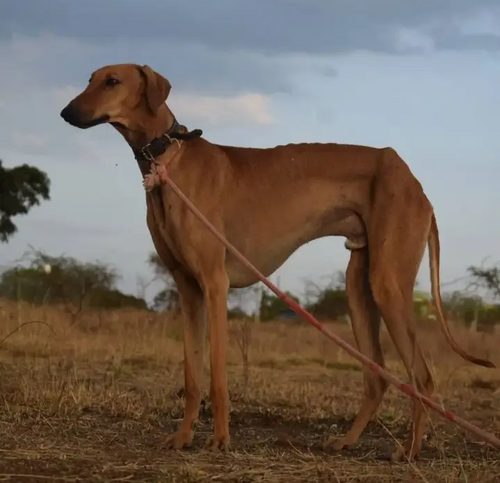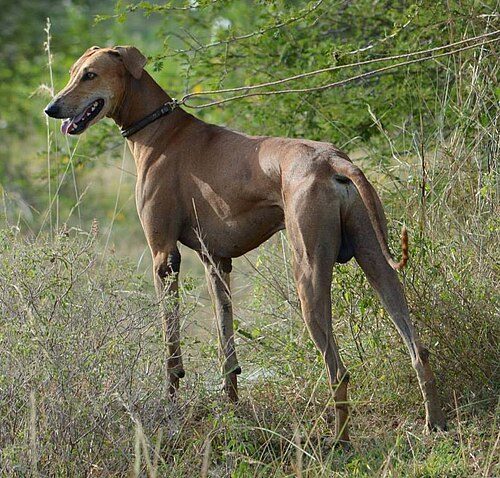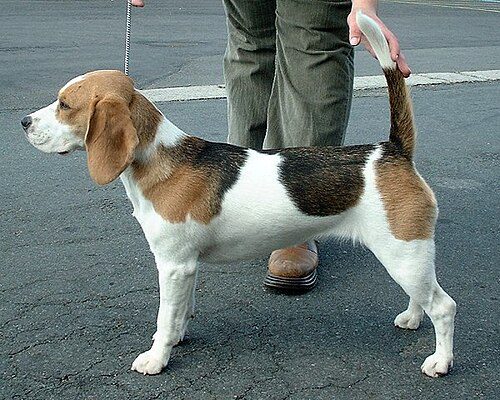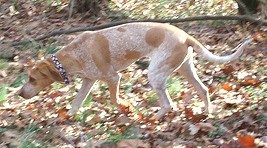
American English Coonhound
| Size at withers | 58-69 cm |
|---|---|
| Weight range | 20-30 kg |
| Life expectancy | 11-12 years |
| Size class | Large (25–40 kg) |
| Normal resting vitals | Heart rate 60–110 bpm · Respiration 10–30/min · Temperature 38.3–39.2 °C |
| Temperament | Sociable, mellow at home, intensely driven and loud when working a scent |
| Common health issues | Ear infections from pendulous ears; generally healthy and athletic |
| Exercise needs | Very high - 90 min/day; a fast, tireless runner |
| Climate & housing suitability | Low to moderate suitability - the short coat handles warm climates, but the speed and bawling voice call for rural room rather than close quarters. |
| Owner notes | Also called the Redtick; noted for a fast chase and a ringing, bugle-like voice. |
Origin and purpose
Hound (AKC); FCI Group 6 (not FCI-recognised). Origin: United States; from English foxhounds brought by colonial settlers.
Also called the Redtick; noted for a fast chase and a ringing, bugle-like voice.
What a breed was built to do explains most of what it will do in your home. A dog selected for hundreds of years to run, guard, herd, or hunt does not stop wanting to because it now lives in an apartment — the drive is the breed, and the owner's job is to give it somewhere to go.
Temperament and training
Stated temperament: Sociable, mellow at home, intensely driven and loud when working a scent
Reward-based training from the day the puppy arrives, with the socialisation window (roughly three to sixteen weeks) treated as the priority it is — what happens in those weeks shapes the adult dog more than anything you do later. Short, frequent, positive sessions. See Parts IV and IX.
Conditions this breed is predisposed to
Health screening — what to test, and when
| Screen for | Test | When |
|---|---|---|
| Otitis externa (ear canal inflammation) | Ear examination (otoscopy), and cytology of any discharge | At every annual visit; on any head-shaking, odour, or scratching |
Every dog, every breed: an annual health examination (twice yearly from seven years), body-condition scoring at each visit, dental assessment, year-round parasite control, and the core vaccinations.
Feeding
Growth is the thing that matters. Large-breed puppies must be fed a diet formulated for large-breed growth and must NOT be overfed or supplemented with calcium — growing too fast is a direct route to the joint disease this size of dog is already prone to. A lean puppy is a healthy puppy. As an adult, two measured meals a day, and keep the dog lean for life: excess weight is the single biggest accelerator of hip and elbow disease and arthritis.
Exercise and enrichment
Stated requirement: Very high - 90 min/day; a fast, tireless runner
This is a genuinely high-energy dog and the commonest reason such dogs are rehomed is that their owners underestimated this. It needs hard daily physical exercise AND a job to think about; a walk around the block is not exercise for this breed. An under-exercised dog of this type becomes destructive, noisy, and anxious — behaviour problems that are, correctly understood, an exercise deficit.
Climate and living conditions
Stated suitability: Low to moderate suitability - the short coat handles warm climates, but the speed and bawling voice call for rural room rather than close quarters.
Ageing and senior care
Life expectancy: 11-12 years. This dog is a senior from around 7 years, at which point wellness examinations should move to twice a year and senior blood and urine screening begins. Large dogs age faster than small ones. Arthritis and cancer are the dominant concerns; do not dismiss a limp in an older large dog as 'just age' — bone cancer presents exactly that way. Senior care →
Before you take one home
- Consider adoption. Shelters and rescues have dogs of every kind, including purebreds, and the local native or landrace dog is often healthier, better adapted to its climate, and more in need of a home than almost anything you can buy. See Part XII.